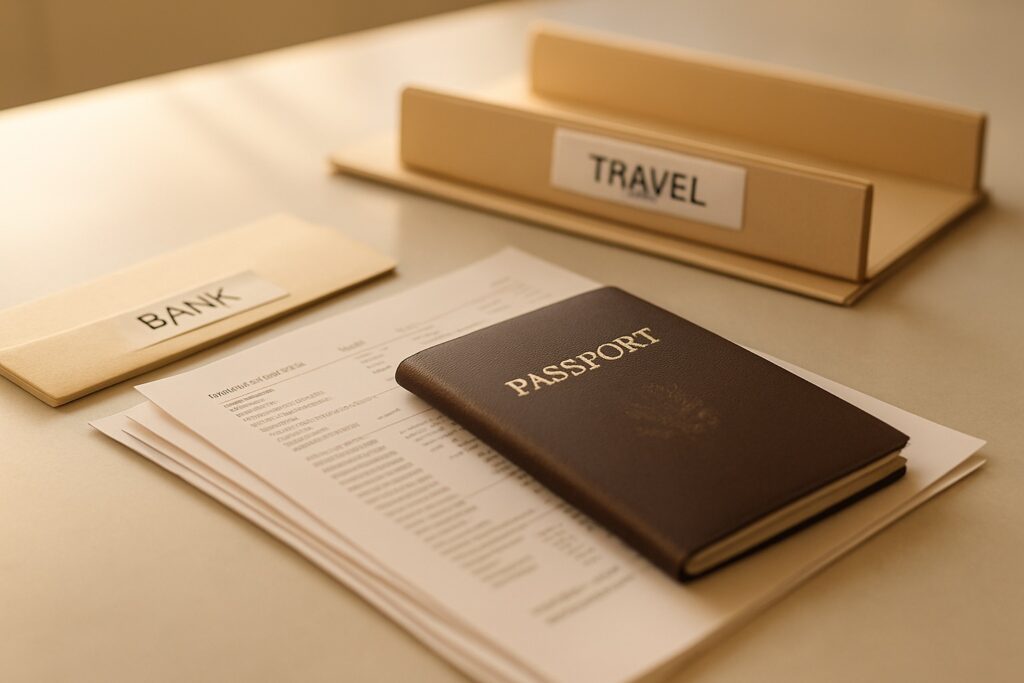
A Canada visitor visa application succeeds or fails on the strength of its paperwork. Immigration, Refugees and Citizenship Canada (IRCC) assesses whether you’re a genuine visitor who will leave at the end of your stay, and the only way an officer can judge that is through the documents you submit. Miss a piece, submit a weak version of it, or leave something unexplained, and a refusal often follows.
This checklist walks through every document you need for a Canada visitor visa, also called a temporary resident visa (TRV), and explains why each one matters. Code X Elite prepares and organises visa application packages. We’re a document preparation and form-filling service, not a law firm, and nothing here is legal advice. For current fees, processing times, and official requirements, always check the IRCC website directly.
The core documents every applicant needs
1. A valid passport
Your passport is the foundation of the application. It should be valid well beyond your planned travel dates, and you’ll want at least one blank page for the visa itself. If your passport expires soon, renew it first, because IRCC will not issue a visa that outlasts your travel document. Include copies of the biographical page and any pages with previous visas or entry stamps.
2. Passport-style photos
You need a photo that meets IRCC’s specifications for size, background, and how recently it was taken. Photo rules are strict, and a photo that doesn’t match the published dimensions can hold up the whole file. Check the exact measurements and format on the IRCC website before you have photos taken, and keep digital copies if you’re applying online.
3. Proof of funds
You have to show you can pay for your trip and your stay without working in Canada. Bank statements covering the last several months are the usual proof, ideally showing a steady balance rather than a large deposit that appeared days before you applied. A sudden lump sum raises questions about where the money came from and whether it’s really yours to spend.
Strong proof of funds can include:
- Personal bank statements for the past four to six months
- A letter from your bank confirming your account balance and how long it’s been open
- Proof of other assets or income, such as investment or savings statements
- Pay slips that line up with the deposits in your account
Consistency is what officers look for. Your funds should make sense next to your income, your job, and the cost of the trip you’re describing.
Documents that explain your trip
4. Purpose of travel and an itinerary
An officer wants a clear answer to one question: why are you going to Canada, and for how long? A short cover letter that states the reason for your visit, your travel dates, and what you plan to do gives that answer directly. Attach a rough itinerary, flight reservations, and hotel bookings or details of where you’ll stay. You don’t need every hour planned, but the trip should look real and thought through.
5. Invitation letter, if you’re being hosted
If you’re visiting family or friends, an invitation letter from your host in Canada supports your application. It should state who they are, their status in Canada (citizen, permanent resident, or valid visa holder), your relationship to them, how long you’ll stay, and whether they’ll cover any of your costs. Ask your host to include copies of their own status documents. An invitation letter doesn’t guarantee a visa, but it helps explain your purpose and where you’ll be.
Documents that show you’ll return home
This is the part many applicants underestimate. IRCC needs to believe you’ll leave Canada when your visit ends. The evidence for that is your ties to your home country, the reasons you have to go back.
6. Proof of ties to your home country
Ties are the anchors that pull you home. The stronger and more varied they are, the more convincing your application. Useful documents include:
- Employment: a job you’re returning to, shown through a letter and pay records
- Family: a spouse, children, or dependent relatives who stay behind
- Property: a deed, mortgage statement, or lease showing a home you keep
- Business or studies: a company you run or a course you’re enrolled in
No single document proves ties on its own. Together, they build a picture of a life you have every reason to come back to.
7. Employment or income letter
If you’re employed, a letter from your employer carries real weight. It should confirm your position, your salary, how long you’ve worked there, that your leave is approved, and that your job is waiting when you return. If you’re self-employed, provide business registration, tax records, and bank statements for the business. Retired or living on other income? Show pension statements or the source of your support. This document ties directly back to both your proof of funds and your reasons to return home.
8. Travel history
A record of past international travel, especially to countries with visa systems like Canada’s, helps show you’ve followed the rules before and returned home as agreed. Include copies of previous visas and entry and exit stamps. If you have little or no travel history, that isn’t a refusal on its own, but it makes the rest of your package, your ties and your funds, more important to get right.
The required forms
Two forms sit at the centre of a visitor visa application. Fill them out completely and consistently, because contradictions between your forms and your supporting documents are one of the most common reasons files get flagged.
9. IMM5257 – Application for a Temporary Resident Visa
This is the main application form for a visitor visa. It collects your personal details, passport information, travel plans, and background. Answer every field accurately and make sure the information matches your passport and your other documents exactly. Small mismatches, like an address or a date that doesn’t line up, can undermine an otherwise solid application.
10. IMM5645 – Family Information
This form records details about your family members, including spouse, children, parents, and siblings, whether or not they’re travelling with you. IRCC uses it to understand your family situation and, in part, your ties. Complete it fully. Leaving relatives off or entering conflicting details creates exactly the kind of inconsistency officers notice.
Put it together before you submit
Once you’ve gathered everything, review the whole package as a single story. Do the funds match the income? Does the itinerary match the purpose? Do the forms agree with the supporting documents? A visa application isn’t just a stack of papers. It’s an argument that you’re a genuine visitor with the means to travel and every reason to come home, and each document is one line of that argument.
Requirements can differ based on your country, your situation, and updates to IRCC policy, so confirm the current document list, fees, and processing times on the official IRCC website before you apply.
Get help preparing your Canada visitor visa package
Gathering, organising, and completing all of this correctly takes time, and small errors cost applicants weeks or a refusal. Code X Elite prepares your document package and fills out your forms so everything is complete, consistent, and ready to submit. We’re a document preparation service, not a law firm, and we don’t give legal advice. If you’d like a hand getting your application right the first time, start your Canada visitor visa package with Code X Elite.
Want this done for you?
We prepare your entire Canada visitor visa application: forms filled, letters written, checklist complete.
Start your application