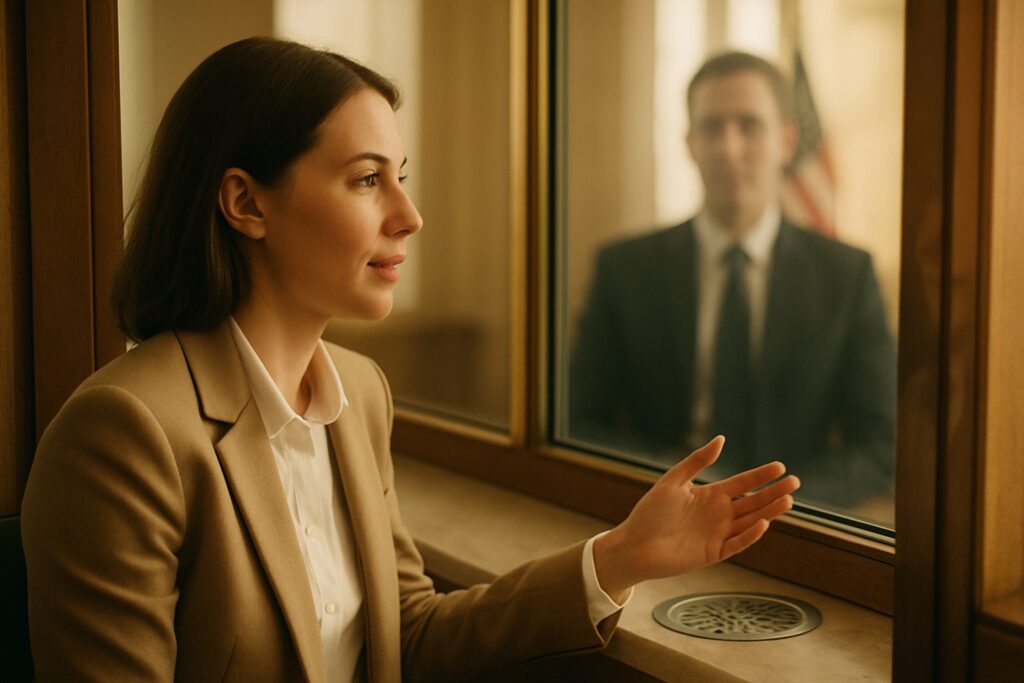
Your US visitor visa interview is short, often just a few minutes. The officer decides if you qualify as a genuine temporary visitor under section 214(b), so you carry the burden of proof. Answer honestly, briefly, and consistently with your DS-160, and show strong ties that bring you home.
What the officer is really assessing
US law starts from an assumption written into section 214(b): every applicant is treated as an intending immigrant until they prove otherwise. That sounds harsh, but it tells you exactly what the interview is about. The officer isn’t trying to catch you out. They’re deciding one thing, whether you’ll come to the US as a temporary visitor and then return home.
That’s why the burden sits with you, not the officer. You need to show strong ties to your home country: a steady job, family, studies, property, or business that give you a clear reason to go back. The decision often comes fast, sometimes in the first minute, based on your answers and how they match your paperwork. For the official rules on 214(b) and B1/B2 visitor visas, confirm the details at travel.state.gov.
Common interview questions
Officers don’t read from a fixed list, but the questions almost always fall into a handful of areas. If you can answer these clearly and truthfully, you’re ready for most of what comes up.
- Purpose of your trip. Why are you going to the US? Tourism, visiting family, a conference, medical treatment?
- How long you’ll stay. When will you travel and when will you return?
- Where you’ll stay. A hotel, a relative’s home, an address you can name.
- Who’s paying. Are you covering the trip yourself, or is someone sponsoring you? What do they do?
- Your job or studies. What’s your role, your employer, your salary, or your school and program?
- Your family. Are you married? Do you have children? Where do they live?
- Previous travel. Which countries have you visited, and did you return on time?
- Your ties. What brings you back home: work, family, property, a business?
How to answer well
The best answers are honest, short, and match your DS-160 and your documents. Officers hear thousands of interviews, so a rehearsed speech stands out for the wrong reasons. Speak plainly and stop when you’ve answered the question.
Don’t memorise scripts. If your words don’t line up with what you wrote on the form, that gap raises doubt, even when you’ve done nothing wrong. Know your own application well enough to answer any of it naturally: your travel dates, your sponsor, your job title, your reason for going.
Never lie or exaggerate, and never let anyone advise you to. A false statement can sink an application that would have been fine on the truth, and it can follow you into future ones. If you don’t know an answer, say so honestly rather than guessing. Confidence built on the facts of your own life is what reads as genuine.
What to bring
Two documents matter most at the window. Bring your DS-160 confirmation page with the barcode, and your interview appointment confirmation. Without the DS-160 confirmation, the interview can’t proceed.
Beyond those, bring a valid passport and any papers that back up your ties and your story: proof of employment, bank statements, property or business records, and evidence of who’s funding the trip. The officer may not ask for all of it, but having it ready and organised means you’re never scrambling. Check the current document requirements for your specific location at travel.state.gov, since they can vary by embassy or consulate.
Mistakes that hurt you
Most refusals under 214(b) come down to a few avoidable problems. Watch for these.
- Answers that don’t match your DS-160. Different dates, a different sponsor, or a job that doesn’t line up create doubt fast.
- Vague ties. “I’ll come back” isn’t an answer. Name the job, the family, the property that pulls you home.
- Over-talking. Long, rambling answers invite more questions. Answer, then stop.
- Memorised scripts. They sound coached and often collapse under a follow-up question.
- Missing paperwork. Forgetting the DS-160 confirmation page or appointment letter can end the interview before it starts.
- Any dishonesty. Even a small false claim can cost you the visa and damage future applications.
Where the paperwork trips people up is the part we help with. Getting a client’s forms, dates, and supporting documents to line up cleanly, before they ever reach the window, is the whole point of preparing well. It’s harder to answer with confidence when you’re unsure whether your own application is consistent.
Frequently asked questions
How long does the visitor visa interview take? Often just a few minutes. Officers make many decisions each day, so questions come quickly and the answers you give need to be clear and consistent.
What documents do I have to bring? At minimum, your DS-160 confirmation page with the barcode and your appointment confirmation, plus a valid passport. Bring supporting documents for your ties and funding too. Confirm the exact list for your consulate at travel.state.gov.
Can I prepare answers in advance? Know your own application inside out, but don’t memorise a script. Truthful, natural answers that match your DS-160 do far more for you than a rehearsed speech.
Code X Elite is a document-preparation service, not a law firm, and we don’t give legal advice. You submit your own application; we help you get your documents right first. Always confirm official requirements at travel.state.gov.
Want your DS-160 and supporting documents checked for consistency before your interview? See our US visitor visa preparation service, read the full guide to applying for a US visitor visa, or start your B1/B2 preparation now.
Want this done for you?
We prepare your entire Canada visitor visa application: forms filled, letters written, checklist complete.
Start your application